
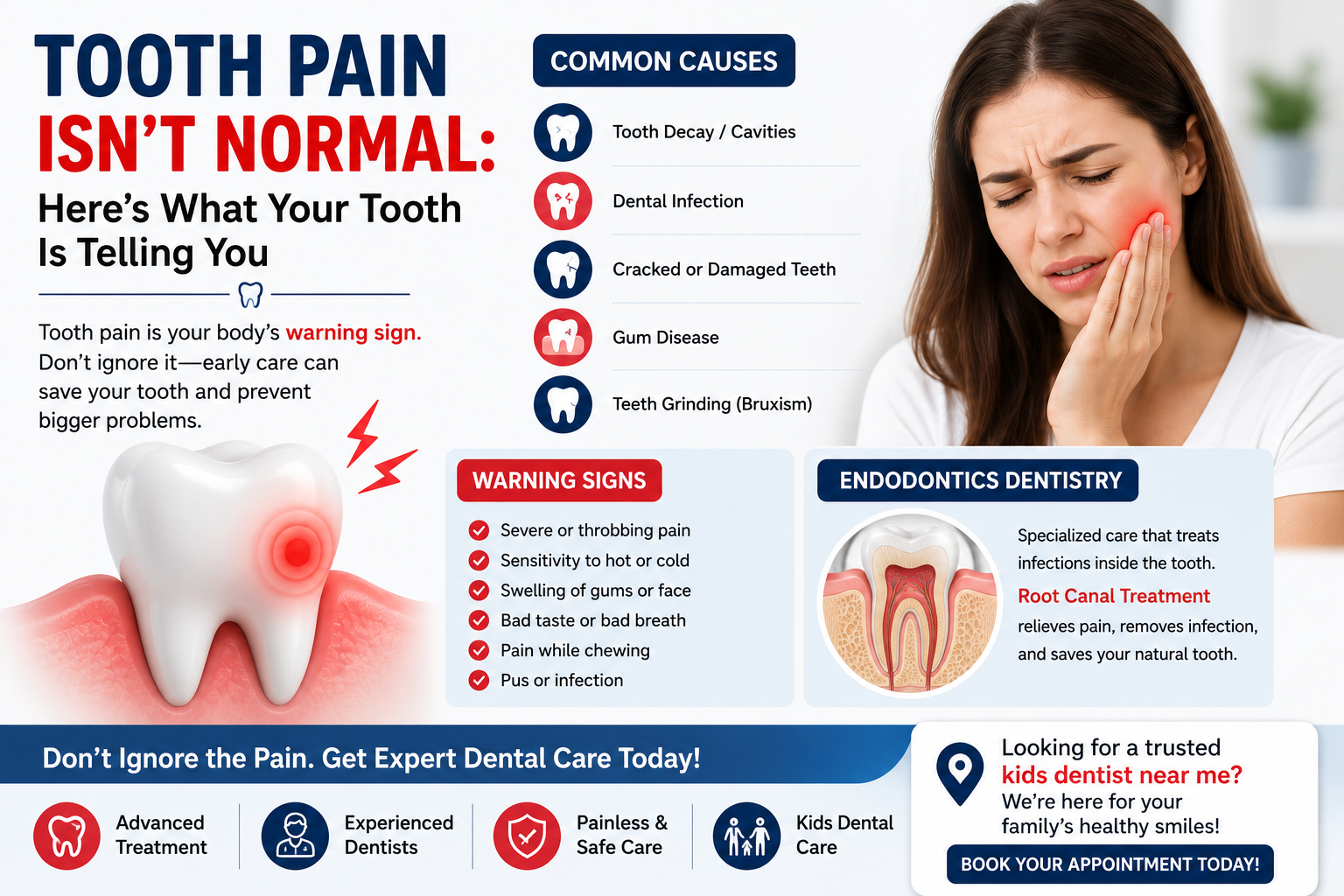
Tooth Pain Isn’t Normal: Here’s What Your Tooth Is Telling You
Most people ignore tooth pain at least once. Some wait for the pain to disappear on its own, while others rely on painkillers and delay visiting the dentist. But here’s the truth — tooth pain is never “normal.” It is your body’s way of warning you that something is wrong.
Sometimes the issue may be minor, like tooth sensitivity or a small cavity. In other cases, it could signal a deep infection, nerve damage, or serious dental condition requiring immediate treatment. Ignoring the signs can allow the problem to worsen over time, leading to severe pain, swelling, infection, and even tooth loss.
Understanding what your tooth is trying to tell you can help you seek timely treatment and protect your long-term oral health.
Why Tooth Pain Should Never Be Ignored
Your teeth are connected to nerves, tissues, and blood vessels. When pain occurs, it usually means these structures are irritated, damaged, or infected.
Pain is not just discomfort — it is a warning signal.
Many dental problems start small but gradually become serious if left untreated. A mild ache today could turn into intense pain tomorrow. In some cases, untreated dental infections can even affect nearby teeth, gums, jawbone, and overall health.
This is where Endodontics Dentistry plays an important role. Endodontic treatment focuses on diagnosing and treating problems inside the tooth, especially infections involving the dental pulp and nerves.
Common Reasons Behind Tooth Pain
1. Tooth Decay and Cavities
One of the most common causes of tooth pain is tooth decay. Cavities slowly damage the enamel and reach deeper layers of the tooth if untreated.
Signs may include:
Sensitivity to sweets or cold drinks
Sharp pain while eating
Visible holes or dark spots on teeth
Early treatment can prevent the need for more complex procedures later.
2. Dental Infection
An infected tooth can cause severe throbbing pain that may spread to the jaw, ear, or head. Infection develops when bacteria enter the inner portion of the tooth.
Common symptoms include:
Persistent pain
Swelling around the gums
Bad taste in the mouth
Fever or facial swelling
In such cases, immediate dental care is necessary to prevent the infection from spreading further.
3. Cracked or Damaged Teeth
A cracked tooth may not always be visible, but it can cause pain while chewing or drinking hot and cold beverages.
Even small cracks allow bacteria to enter the inner tooth structure, increasing the risk of infection.
4. Gum Disease
Swollen or bleeding gums may also contribute to tooth discomfort. Gum infections affect the tissues supporting the teeth and can eventually loosen teeth if untreated.
5. Teeth Grinding (Bruxism)
Many people unknowingly grind their teeth during sleep. This habit can wear down enamel and place pressure on the teeth and jaw muscles, leading to pain and sensitivity.
Warning Signs Your Tooth Needs Immediate Attention
Some symptoms should never be ignored because they may indicate serious dental problems.
Watch for:
Severe or throbbing toothache
Pain that lasts more than two days
Swelling around the face or gums
Sensitivity to hot or cold foods
Pain while chewing
Pus or bad smell from the gums
Broken or chipped teeth
Fever with dental pain
Seeking treatment early often prevents more complicated and expensive procedures later.
What Is Endodontics Dentistry?
Many people hear the term but are unsure what it means.
Endodontics Dentistry is a specialized branch of dentistry focused on treating the inside of the tooth, especially the dental pulp, nerves, and root tissues.
The most common endodontic procedure is root canal treatment. Contrary to common myths, modern root canal procedures are safe, comfortable, and designed to save natural teeth.
The goal of endodontic treatment is to:
Remove infection
Relieve pain
Preserve the natural tooth
Prevent tooth extraction
Saving your natural tooth is always better for long-term oral health whenever possible.
Signs You May Need Root Canal Treatment
A root canal may be necessary if the tooth’s inner pulp becomes infected or severely damaged.
Possible signs include:
Persistent tooth pain
Lingering sensitivity to heat or cold
Swollen gums
Darkening of the tooth
Pain while chewing
Recurrent gum boils or pimples
Modern endodontic care focuses on patient comfort and faster recovery.
How Delaying Dental Treatment Makes Things Worse
One of the biggest mistakes patients make is waiting too long before seeing a dentist.
Dental problems rarely improve without professional treatment. Instead, they often worsen silently.
For severe swelling or infection, immediate emergency dental care may be necessary.
Ignoring tooth pain may lead to:
Severe infections
Tooth abscess
Bone loss around teeth
Increased treatment cost
Tooth extraction
Difficulty eating or speaking
Early treatment not only saves teeth but also reduces discomfort and future complications.
How to Protect Your Teeth from Pain and Infection
Prevention always remains better than treatment.
Here are simple ways to maintain healthy teeth:
Brush Properly Twice Daily
Use fluoride toothpaste and a soft-bristled toothbrush.
Floss Regularly
Flossing removes food particles and plaque between teeth where brushes cannot reach.
Avoid Excess Sugary Foods
Sugary snacks and drinks increase the risk of cavities and bacterial growth.
Schedule Regular Dental Check-Ups
Routine dental visits help identify small problems before they become painful.
Don’t Ignore Sensitivity
Mild sensitivity can sometimes be an early warning sign of tooth damage.
Wear a Night Guard If Needed
If you grind your teeth at night, your dentist may recommend a protective night guard.
Tooth Pain in Children Should Also Be Taken Seriously
Many parents assume baby teeth are temporary and less important, but untreated tooth problems in children can affect eating, speech, confidence, and jaw development.
If your child frequently complains about tooth pain or sensitivity, it is important to consult a pediatric dentist early.
Parents often search online for a kid's dentist near me when children experience cavities or dental discomfort. Early dental visits help children develop healthy oral habits while preventing future complications.
Modern Dentistry Has Made Treatment Comfortable
Fear of dental treatment prevents many people from seeking care. However, dental technology has improved significantly in recent years.
Today’s treatments are:
Faster
More comfortable
Minimally invasive
Highly effective
Modern endodontic procedures are designed to reduce pain, preserve natural teeth, and improve recovery time.
Conclusion
Tooth pain is not something your body creates without reason. Whether it is mild sensitivity, a sharp ache, or severe throbbing pain, your tooth may be warning you about infection, decay, nerve damage, or other serious dental problems.
Ignoring these warning signs can lead to bigger complications over time. Seeking timely dental care can help protect your smile, preserve your natural teeth, and prevent unnecessary discomfort.
With advanced Endodontics Dentistry, many painful dental conditions can now be treated effectively and comfortably. The earlier you act, the easier the treatment often becomes.
If you or your child are experiencing tooth pain, sensitivity, or swelling, don’t wait for the problem to worsen. Schedule a professional dental evaluation and take the first step toward a healthier, pain-free smile.